
What Is in Adventure Fuel Trail Mix? Every Ingredient Explained (With Research)
Adventure Fuel Ingredients: The Complete Research-Backed Guide for Parents
A look inside the snack we built for families who choose the wild over WiFi.
The Problem With Most Kids Snacks Starts With the Ingredient List
Most grab-and-go snacks marketed to families share a common problem. They are built around one nutritional idea: make it taste good enough that kids will eat it.
That usually means added sugar near the top of the ingredient list, refined carbohydrates as the base, and a collection of flavoring agents doing the heavy lifting. The front of the bag might look healthy. The back of the bag tells a different story.
Adventure Fuel was built from the opposite direction.
We started with a simple nutritional question: what does an active kid actually need from a snack?
Not a supplement. Not a meal replacement. A real snack that satisfies, travels well, requires no refrigeration, and contains ingredients a parent can recognize without a chemistry degree.
The answer shaped every ingredient in the bag.
This is not a superfood story. There is no miracle ingredient here.
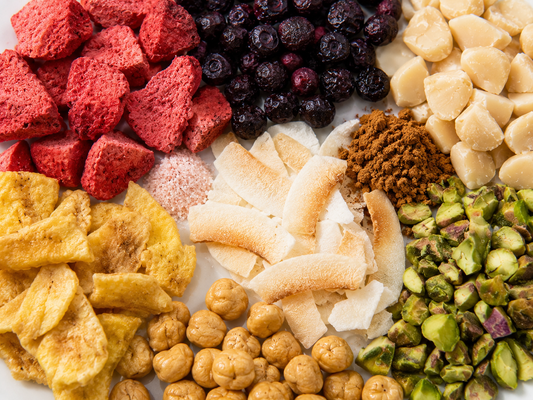
What we built is a snack with a coherent nutritional architecture. Each ingredient has a specific job. Here is what that looks like, and some of the research that helped shape our thinking along the way.
Every Ingredient Has a Job
1. Roasted Chickpeas — The Protein and Fiber Foundation
Chickpeas anchor Adventure Fuel's nutritional profile. They are the ingredient doing the most structural work in the bag: delivering plant protein and dietary fiber in a shelf-stable, kid-friendly format.
Why does that matter for a snack? Because protein and fiber are the two dietary components most consistently associated with satiety, the feeling of actually being full rather than just having eaten something.
A randomized crossover study published in Food and Nutrition found that a high-protein meal built around beans and peas produced significantly greater fullness and lower hunger than a comparable meal built around animal protein. Participants also consumed approximately 12 to 13 percent less energy at their next meal. The researchers identified the substantially higher fiber content of the legume meal as a likely key contributor to those outcomes.
That is the nutritional logic behind starting with chickpeas. They form the foundation that makes Adventure Fuel a snack that satisfies rather than one that simply fills the gap for 20 minutes before the next request for food.
Research: Meals based on vegetable protein sources (beans and peas) are more satiating than meals based on animal protein sources — a randomized cross-over meal test study. Randomized crossover study in healthy adults. High-protein legume meals produced greater fullness, lower hunger, and 12 to 13 percent lower energy intake at the following meal compared to high-protein meat-based meals.
2. Pumpkin Seeds — The Nutritional Workhorse
Pumpkin seeds are not a flashy ingredient. They do not have a dramatic origin story or a trending wellness claim attached to them. They are simply one of the most nutrient-dense whole foods available in a portable, shelf-stable format.
They contribute plant protein, unsaturated fats, fiber, and naturally occurring minerals including magnesium, zinc, and iron. These are nutrients that are commonly under-consumed in children's diets and that most grab-and-go snacks do not come close to delivering.
Alongside chickpeas, pumpkin seeds help create the protein, fiber, and fat structure that separates Adventure Fuel from snacks built primarily around refined carbohydrates. They are not there to make a marketing claim. They are there because they make the snack work.
Research: Pumpkin Seeds as a Nutraceutical Used in Various Lifestyle Disorders. Review of pumpkin seed nutritional composition, including proteins, fatty acids, minerals, and bioactive components. Highlights pumpkin seeds as a nutrient-dense whole food with meaningful contributions of magnesium, zinc, and iron.
3. Plantain and Green Banana Chips — Real-Food Carbohydrates for Active Kids
Active kids need carbohydrates. That is not a controversial statement. Carbohydrates are the body's preferred fuel source during physical activity, and a snack designed for kids who are hiking, exploring, and moving needs to include them.
The question is not whether to include carbohydrates. It is what kind and what they are paired with.
Plantains provide complex carbohydrates alongside fiber and potassium, in a recognizable whole-food format that does not require added sugar to taste good. Crucially, in Adventure Fuel they are paired with protein, fiber, and fats from chickpeas, pumpkin seeds, and nuts. That combination matters.
Research comparing breakfasts with different carbohydrate and fat ratios found that a relatively higher-carbohydrate, lower-fat meal was associated with an earlier rise and fall in blood glucose and a faster return of hunger than a more balanced meal. That is not a claim that Adventure Fuel stabilizes blood sugar. It is the nutritional rationale behind building a snack that pairs its carbohydrate source with fiber, protein, and fat rather than letting carbohydrates carry the whole load.
Plantains do the energy job. The rest of the bag makes sure that energy lasts.
Research: Return of hunger following a relatively high carbohydrate breakfast is associated with earlier recorded glucose peak and nadir. Study in 64 adults examining the relationship between breakfast macronutrient composition, post-meal glucose patterns, and the timing of hunger return. The relatively lower-carbohydrate, higher-fat breakfast delayed the return of hunger.
Plantain Nutrition Facts and Health Benefits. Nutrition overview covering plantains as a source of complex carbohydrates, fiber, potassium, magnesium, and several vitamins.
4. Freeze-Dried Strawberries — Real Fruit Without the Added Sugar
Strawberries give Adventure Fuel natural sweetness, bright flavor, and real fruit. No added sugar required.
From a formulation standpoint, their most important job is flavor. They are the ingredient that makes kids reach back into the bag. But they do it without introducing refined sugar, which means the sweetness comes packaged with naturally occurring plant compounds rather than empty calories.
Clinical research has examined freeze-dried strawberries in relation to antioxidant status and cardiovascular markers in adults. Those studies used much larger amounts of strawberry than a pouch of Adventure Fuel contains, and involved specific adult populations, so we would not stretch that research into a claim about what Adventure Fuel does for kids. What the research does tell us is that strawberries are a genuinely substantive ingredient, not a token fruit addition.
They are there because real fruit belongs in a snack for kids who are actually outside doing real things.
Research: Dose-Response to Strawberry Supplementation on Atherogenic Lipids and Markers of Oxidative Stress in Subjects with Abdominal Adiposity and Elevated Serum Lipids. Randomized study in adults with abdominal adiposity and elevated blood lipids. High-dose freeze-dried strawberry supplementation reduced total and LDL cholesterol and affected a marker of lipid oxidation.
Effects of Freeze-Dried Strawberry Supplementation on Metabolic Biomarkers of Atherosclerosis in Subjects with Type 2 Diabetes. In adults with type 2 diabetes, freeze-dried strawberry supplementation was associated with improvements in antioxidant status and reductions in inflammatory and oxidative stress markers.
5. Freeze-Dried Blueberries — The Most Interesting Research in the Bag
If any single ingredient in Adventure Fuel has the most compelling research behind it specifically for children, it is blueberries.
A randomized, double-blind crossover study examined the acute cognitive effects of wild blueberry supplementation in children ages 7 to 10. Researchers observed improvements in several measures of memory and cognitively demanding tasks following blueberry consumption, with overall performance following a dose-response pattern across the two doses tested.
This is not a claim that a pouch of Adventure Fuel improves your child's memory. The study used blueberry powder in a specific controlled dose, and the quantity of blueberries in Adventure Fuel is not equivalent. But the research is genuinely interesting because it was conducted in children in the exact age range our snack is designed for, and it points to real fruit as an ingredient worth taking seriously.
Blueberries are in Adventure Fuel because they are real fruit that kids love, that contributes naturally occurring plant compounds including anthocyanins, and that does not require added sugar to deliver great flavor. The child-specific research makes them particularly meaningful to us as a brand.
Research: Cognitive Effects Following Acute Wild Blueberry Supplementation in 7 to 10 Year Old Children. Randomized double-blind crossover study in 21 children ages 7 to 10. Researchers reported blueberry-related improvements in several measures of memory and cognitive performance, with the strongest overall results following the higher 30g dose.
6. Macadamia Nuts — Whole-Food Fats and Satisfying Texture
Macadamia nuts are primarily a fat ingredient, and that is not a criticism. Fat is an essential macronutrient for growing kids. It supports energy, nutrient absorption, and satiety. The type of fat matters, and macadamias are predominantly monounsaturated, the same category of fat found in olive oil and avocados.
The broader tree nut literature supports nuts as nutrient-dense foods. The evidence for specific clinical outcomes varies considerably among individual nut types, which is why we would not claim macadamias perform some singular health function in Adventure Fuel. Their role is more honest and more straightforward than that.
They contribute satisfying texture, whole-food fats, and nutrient density. They make the snack more filling and more interesting to eat. For a product designed to keep kids fueled through real outdoor activity, that is enough of a job.
Research: Effects of Tree Nuts on Blood Lipids, Blood Pressure, and Inflammatory Markers. Scientific review of evidence surrounding tree nuts and cardiovascular risk factors. Evidence varied considerably among individual nuts, an important reminder not to generalize findings from one nut type to another.
7. Pistachios — Plant Protein, Fiber, and Unsaturated Fats in One Ingredient
Pistachios are one of the more nutritionally complete nuts available. They contribute plant protein, dietary fiber, and predominantly unsaturated fats, which makes them unusually useful in a mixed snack format.
A controlled study found that incorporating pistachios as approximately 20 percent of daily energy intake increased participants' intake of vegetable protein, unsaturated fats, and fiber without significantly changing body weight or body composition. Broader reviews of nut research in children have found that including nuts in kids' diets can improve overall diet quality, including greater intake of protein, fiber, and unsaturated fats.
In Adventure Fuel, pistachios help balance the fruit and carbohydrate components of the mix. They add protein and fat alongside the chickpeas and pumpkin seeds, reinforcing the nutritional architecture the whole snack is built around.
Research: Pistachio Consumption at 20% of Energy Does Not Significantly Change Body Composition. Controlled study in healthy young women. Adding pistachios increased intake of vegetable protein, unsaturated fat, and fiber without significantly changing body weight or body fat.
Nut Consumption and Health Outcomes in Children and Adolescents. Systematic review of nut consumption in children ages 8 to 18. Found that nut consumption improved overall diet quality including intake of unsaturated fats, protein, and fiber.
8. Toasted Coconut — Flavor and Fat Without Added Sugar
Coconut has a simple but important job in Adventure Fuel: it adds texture, warmth, and a naturally sweet flavor without requiring us to add sugar to achieve it.
We use unsweetened toasted coconut. That distinction matters. Sweetened coconut products often contain as much added sugar as a candy bar. Unsweetened coconut delivers the flavor and fat contribution while keeping the added sugar count at zero.
Some research exists around coconut-based foods and children, though the interventions studied are not equivalent to toasted coconut flakes in a trail mix pouch. We would not stretch that research into a specific health claim. Coconut is in Adventure Fuel because it makes a no-added-sugar snack genuinely taste good while contributing to the overall balance of fats in the mix.
Research: Coconut-Based Nutritional Interventions in Children. Study examining coconut-based supplementary foods in children. Interesting child-specific coconut research, though the intervention and population differ substantially from the role toasted coconut plays in Adventure Fuel.
9. Cinnamon — Big Flavor Without More Sugar
Cinnamon has one primary job in Adventure Fuel: make real food taste great without adding sugar to do it.
That is a harder problem than it sounds. Building a snack with 0 grams of added sugar that kids actually want to eat requires ingredients that deliver perceived sweetness and warmth through other means. Cinnamon does exactly that. It adds complexity, warmth, and a familiar flavor that makes the whole mix more appealing to kids who might otherwise reach for something sweeter.
Research has also investigated cinnamon in relation to post-meal metabolic responses and glycemic outcomes, though those studies used much larger amounts than the culinary quantity in Adventure Fuel. We use cinnamon as a spice, not a supplement. The metabolic research is interesting background science, not the reason it is in the bag.
It is in the bag because it works.
Research: Cinnamon Intake and Metabolic Outcomes in Adolescents. Clinical research examining cinnamon in adolescent populations and metabolic markers. Study populations and doses are not equivalent to the culinary quantity of cinnamon used in Adventure Fuel.
Cinnamon and Glycemic Control. Additional clinical literature on cinnamon and metabolic health. Informs the broader scientific understanding of cinnamon without being directly applicable to an Adventure Fuel serving.
10. Salt — Balance, Not Flavor Masking
Salt is the last ingredient on the label and the one that requires the least explanation. A small amount of salt balances the sweetness of the fruit and brings the whole flavor profile together. It is there to make everything else taste more like itself, not to mask inferior ingredients.
Most trail mixes use salt and sugar together to compensate for low-quality base ingredients. Adventure Fuel uses salt and no added sugar, which means the salt is doing its actual job rather than covering anything up.
The Bigger Picture: Why We Built It This Way
Adventure Fuel is not based on the idea that one berry, nut, or seed is magical. The formulation itself is the point.
Mayo Clinic pediatric nutrition guidance recommends building snacks around nutritious whole foods and emphasizes pairing food groups, including fruit, protein sources, and fiber-containing foods, rather than relying on highly processed snack alternatives. Their guidance specifically calls out trail mix as one of the better options for kids when it is built around real ingredients.
Mayo Clinic Minute: Transforming Snack Time With Healthy Options
Mayo Clinic Minute: After-School Snack Ideas
That is the nutritional philosophy Adventure Fuel is built around. Chickpeas and pumpkin seeds form the protein and fiber foundation. Plantains provide carbohydrates for active kids. Nuts and coconut contribute whole-food fats. Strawberries and blueberries deliver real fruit. Cinnamon and salt bring flavor without added sugar.
No miracle ingredient. No magic powder. Just real ingredients, intentionally combined for growing explorers.
Ready to Try It?
Adventure Fuel is coming to the market soon. You can sign up for the launch list at Wild Child Outfitters. Single-serve pouches. No refrigeration required. Grab a bag for the hike, the road trip, the school bag, or the backyard.
Real gear. Real food. Real adventure.
Complete Reference Library
All sources used in this post. We encourage you to read them.
- Meals based on vegetable protein sources are more satiating than meals based on animal protein sources — American Journal of Clinical Nutrition
- Return of hunger following a relatively high carbohydrate breakfast is associated with earlier recorded glucose peak and nadir — PMC
- Plantain Nutrition Facts and Health Benefits — Healthline
- Dose-Response to Strawberry Supplementation on Atherogenic Lipids and Markers of Oxidative Stress — PubMed
- Effects of Freeze-Dried Strawberry Supplementation on Metabolic Biomarkers of Atherosclerosis — PubMed
- Cognitive Effects Following Acute Wild Blueberry Supplementation in 7 to 10 Year Old Children — PMC
- Effects of Tree Nuts on Blood Lipids, Blood Pressure, and Inflammatory Markers — PubMed
- Pistachio Consumption at 20% of Energy Does Not Significantly Change Body Composition — American Pistachio Growers
- Nut Consumption and Health Outcomes in Children and Adolescents — PMC
- Coconut-Based Nutritional Interventions in Children — PubMed
- Cinnamon Intake and Metabolic Outcomes in Adolescents — MDPI
- Cinnamon and Glycemic Control — PubMed
- Pumpkin Seeds as a Nutraceutical Used in Various Lifestyle Disorders — PMC
- Mayo Clinic Minute: Transforming Snack Time With Healthy Options — Mayo Clinic
- Mayo Clinic Minute: After-School Snack Ideas — Mayo Clinic
Tags: